
Areas of Focus
Equity through Research, Partnerships, and Programs
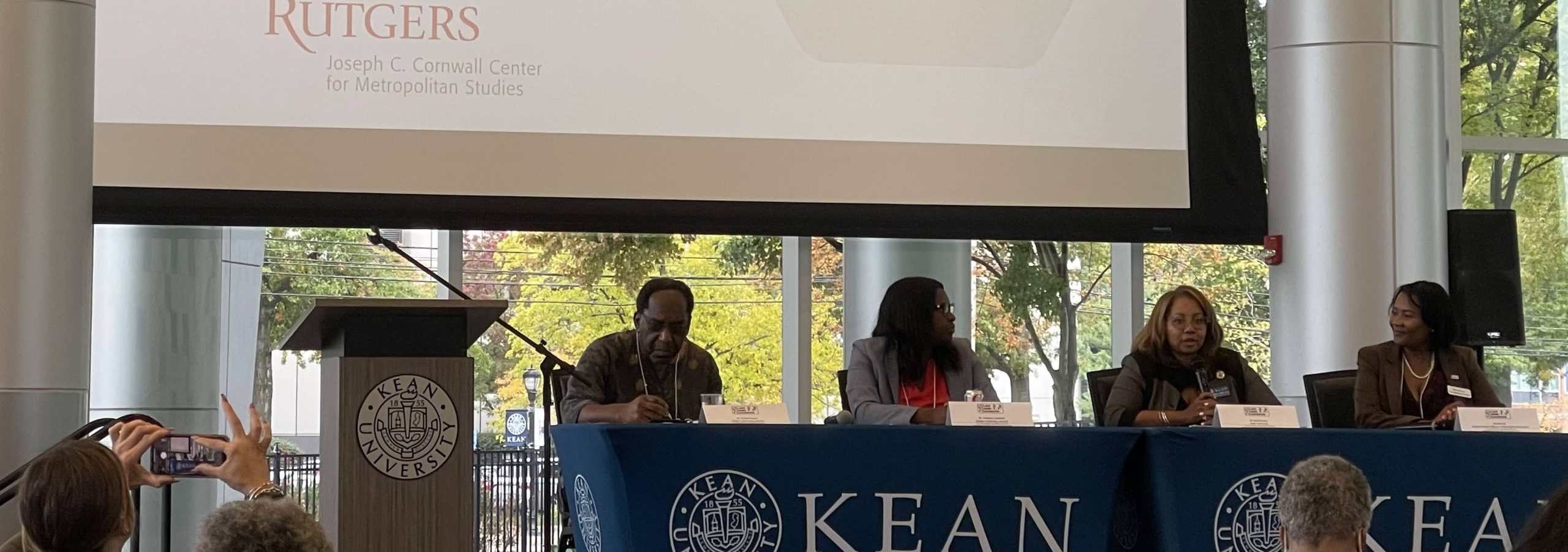
Through research, partnerships, and programs, our work connects to several key domains that require activation in the journey towards greater education equity for children in the city of Newark, the state of New Jersey, and beyond.
Research and data can make a difference by providing evidence on important subtopics important to teaching and learning. Partnerships and community capacity building ensure that all the best practices and policy recommendations endorsed by Cornwall are co-created and grounded in the reality of the stakeholders and practitioners responsible for planning and implementing the work. Finally, our programs and opportunities connect youth and parents to skill-building, leadership, and out-of-school time enrichment rooted in liberatory educational practices.
Together, our three focus areas are a multi-level approach to advancing progress in various education equity arenas designed to make a difference in the lives of our state’s most vulnerable learners and the communities of adults who care for them.
Research & Data
Producing Research Reports
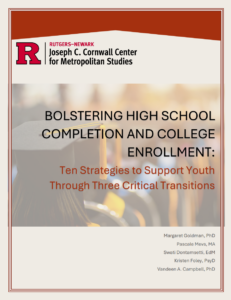
Our series of reports on New Jersey aims to map the landscape of educational opportunities and disparities, focusing on issues that are actionable and high leverage. Our report series covers topics such as inclusive and restorative school discipline, access to resources from mental health professionals to high-leverage courses that could lead to desirable careers, bilingual education, career and technical education, and college readiness. Across these projects, we create dashboards so non-researchers can more easily track and analyze data. An important series in this work looks at course sequencing. It is increasingly clear that some schools offer courses in a sequence that prevents students from taking advanced work, which they may not realize until it’s too late.
Changing the Narrative
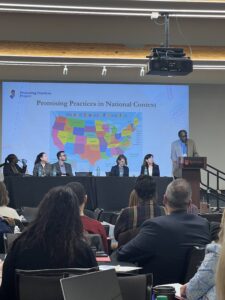
One of the reasons educational research has been a weak tool for equity is the tendency to frame problems in terms of the roots of failure instead of the drivers of success. While we are concerned with understanding patterns of disparities, some of the most promising work we do is identifying places of strong performance. We are deepening our work to study positive outliers, paying particular attention to what we can learn from the schools and districts that are most successful with early learning in both math and literacy. Simply doing the research is not enough; we are more likely to have an impact if the research is embedded in a civic learning process involving a range of stakeholders, particularly those from traditionally underserved communities. Cornwall is actively working to develop a widespread understanding of what is possible for vulnerable children. Just getting past the stereotype that all urban schools are failing and all schools serving low-income children are failing will be a large step forward.


Making Data Accessible
Collective learning projects are important because one way to make research matter is to put it in the hands of people who seldom have access to it. We are developing a community data hub like those in Detroit and New Orleans. This will store a range of socioeconomic, education, health, business, environment, and resource data in one user-friendly, publicly accessible platform. The hub will offer neighborhood profiles across these topic areas. The hub will present a comprehensive picture of the current social landscape of Newark neighborhoods with historical trends where feasible. It will also explicitly map neighborhood assets and opportunities. It will trace the trajectory of youth in the state from early childhood to the workforce, highlighting persistent disparities that need urgent attention and improvement.
Partnerships and Community Capacity
Training Citizen Researchers
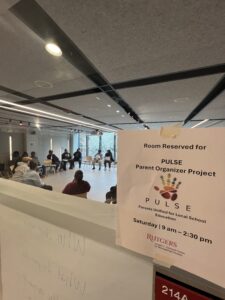
Making data more accessible is valuable, but over the long term, it may be even more valuable to build research skills in communities so that they can ask their own questions and pursue their own answers. We offer training sessions on Critical Participatory Action Research (CPAR) to Newark nonprofit staff so that they can apply a researcher’s lens to their work. We also use CPAR in our collaboration with Parents United for Local School Education (PULSE) to support their goal of training the next generation of parent organizers/researchers. Among other things, PULSE aims to address low parent involvement in schools through research, community building, and organizing.

Strengthening High School Graduation Pathways
One of the projects that best illustrates the blurred line between research and practice is our partnership with Newark Public Schools around the To and Through Project. Developed at the University of Chicago, To and Through aims to see that students are prepared to go to and through college or start good entry-level jobs if they choose. The project tries to get more youth to graduate high school with a strong diploma (which we define as a GPA of 3.0 or better.) In its early stages, the work centers on preventing failure in 9th grade, which may be the strongest predictor of high school graduation.
Programs and Opportunities
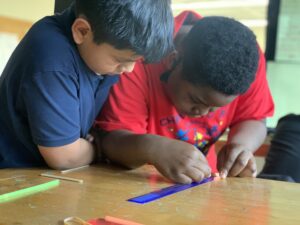
Using Research to Support Out of School Time Enrichment
It is beneficial for research organizations to be involved in implementing ideas that emerge from research. In a sense, one doesn’t really understand research until one tries to build on it. Research on after-school and out-of-school time learning finds that well-executed programs are consistently associated with a range of important long-term social and academic outcomes. Cornwall leads a 21st Century Community Learning Center at Newark’s Thirteenth Avenue Elementary School, serving over 100 students annually in an after-school setting. In addition to academic enrichment, students have access to extracurricular courses such as cosmetology, robotics, Lego engineering, glass making, and a STEM club.
Uplifting Liberatory Pedagogies

Marginalized communities in particular need active citizenry. That by itself would be justification for Freedom Schools – schools that affirm the dignity of children and build their sense of agency – but research on children who have attended Freedom Schools says they also demonstrate a greater love of learning, greater appreciation of their culture, and greater acceptance of responsibility. They improve significantly in reading and show greater interest in civic engagement. In partnership with Newark Public Schools and under the aegis of the Children’s Defense fund, The Cornwall Center leads a Freedom School every summer. We work to increase the visibility of the Freedom School model locally and nationally. We are also working to deepen the research on Freedom Schools.
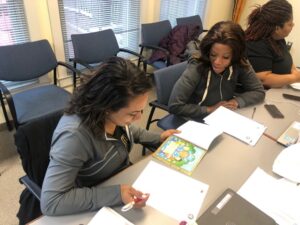
Training Parents, Improving Literacy
Efforts to improve disinvested communities need to build on the talents of those living in them and our Parent Mentorship Academy (PMA) leverages the talent of parents in Newark’s West Ward. This work is strategic and has the potential to move several key levers. When well-implemented, the PMA improves students’ reading, their attitudes, classroom climate, and the confidence and engagement of parents. This was not conceived as a jobs program, but six parents have been hired full-time by their schools, and we are trying to formalize that process. In addition to student gains, and parent employment, having parents in classrooms as literacy coaches has strengthened the relationship between school staff, parents, and the greater community.